





What Is Bruxism?
Causes and Risk Factors of Bruxism
Although the exact mechanism of bruxism is not fully understood, it is believed to result from a combination of psychological factors, such as stress and anxiety, and physical factors, such as joint disorders and misaligned teeth.
Physical Factors:
•Malocclusion (Bite Problems): Improper alignment of the upper and lower teeth can cause excessive jaw muscle activity, increasing the likelihood of bruxism.
•Temporomandibular Joint (TMJ) Disorders: Disorders in the TMJ, the only movable joint in the skull, or muscle sensitivity in the jaw can lead to involuntary jaw movements.
•Genetics: Bruxism may run in families, suggesting a potential genetic predisposition.
•Medication and Substance Effects: Certain antidepressants, amphetamines, and caffeine can trigger bruxism.
•Neurological Disorders: Conditions like Parkinson's disease and Huntington’s disease may cause involuntary jaw movements.
Problems and Symptoms Caused by Bruxism
Tooth and Jaw Pain:
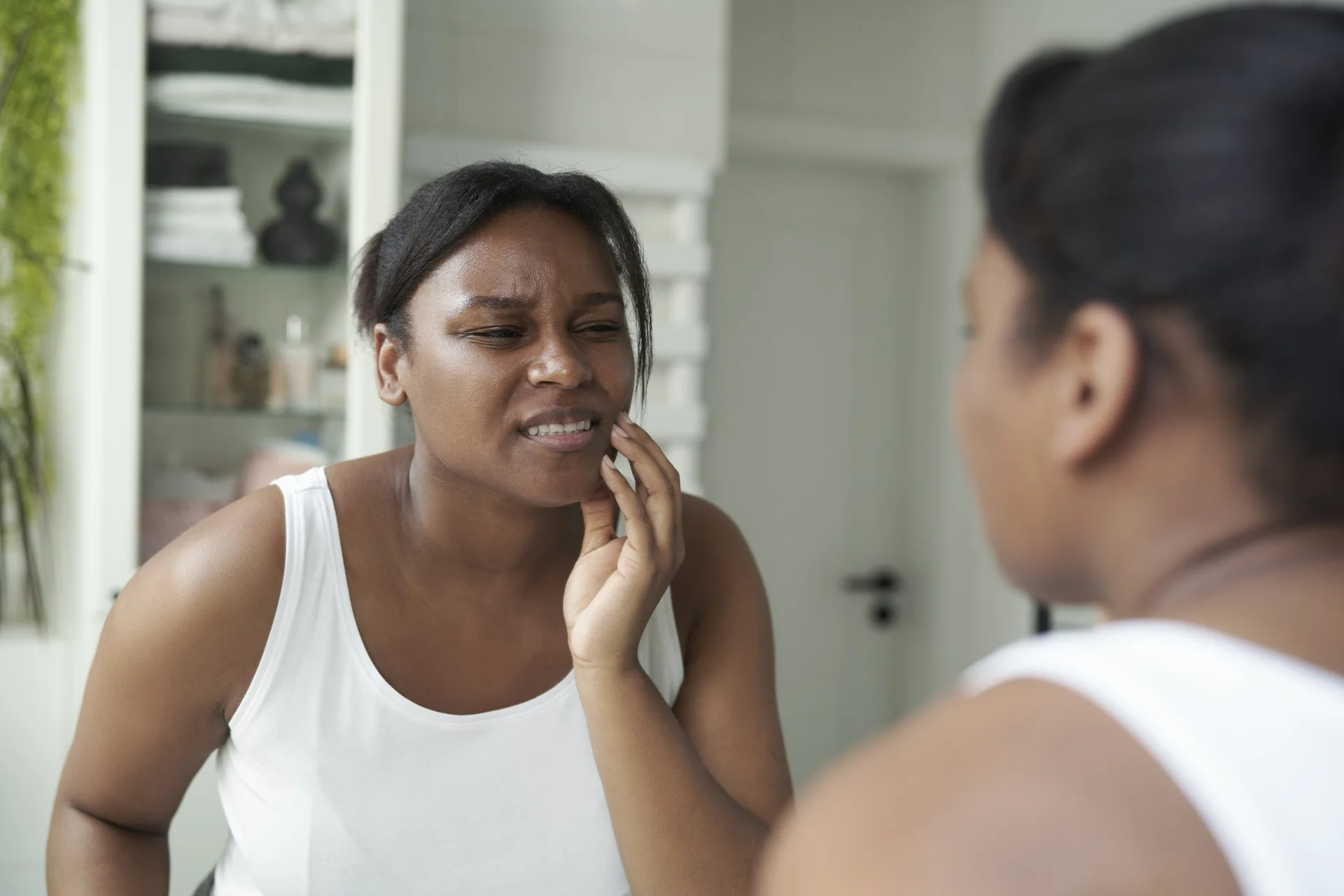
Overworked jaw muscles may lead to stiffness, pain, and sensitivity, especially in the mornings. This clenching and grinding may cause enamel erosion and tooth sensitivity. Additionally, TMJ pain, swelling, and limited jaw movement may occur due to joint strain caused by bruxism.
Teeth Grinding:
Teeth grinding during sleep is often noticed by those around the individual. The sound, caused by the friction of teeth, can disturb both the person’s sleep and those nearby.
Tooth Wear:
Prolonged teeth clenching can result in wear, cracks, or fractures in the teeth. Over time, excessive force may lead to enamel loss, thinning, or shortening of the teeth. Teeth may appear excessively shiny, or changes in shape and texture may become apparent.
Headaches:
People with sleep bruxism may wake up with headaches caused by tension in the overworked jaw muscles.
Sleep Disorders:
The habit of clenching teeth during sleep can significantly impact sleep quality, leading to symptoms such as insomnia or restlessness during the day.
Diagnosis and Treatment Methods
Bruxism is usually diagnosed by a dentist based on the patient’s complaints, oral examination, and, if necessary, imaging techniques. In some cases, sleep studies (polysomnography) may be used to confirm sleep bruxism. Risk factors like stress and anxiety are also considered during diagnosis. Treatment often involves dental interventions or psychotherapy.
Common Bruxism Treatment Methods:
1. Dental Treatments
•Night Guards (Splints): Transparent plastic devices designed to protect the teeth and relax the jaw muscles. These are widely used for nocturnal bruxism.
•Bite Adjustment: Correcting the alignment of the teeth to ensure proper closure can help reduce bruxism.
Misconceptions About Bruxism
"Bruxism only affects stressed individuals."
•Truth: While stress is a common factor, genetic predisposition, sleep disorders (e.g., sleep apnea), certain medications, and malocclusion also contribute to bruxism.
"Bruxism does not occur in children."
•Truth: Bruxism is common in children, often as a normal part of development. It is more frequent during periods of stress or tooth changes but usually resolves as the child grows.
"Bruxism only happens at night."
•Truth: Bruxism can occur both during the day and at night. Nighttime bruxism is unconscious, whereas daytime bruxism is often stress or habit-related.
"Bruxism is harmless."
•Truth: Untreated bruxism can lead to tooth wear, cracks, gum recession, TMJ issues, facial pain, headaches, and even disrupted sleep quality.
"Bruxism will go away on its own."
•Truth: While mild cases may resolve naturally, untreated bruxism can worsen and lead to serious complications.
"Bruxism has a definitive cure."
•Truth: Bruxism is often a chronic condition without a definitive cure. However, various treatments (night guards, Botox, stress management) can effectively manage symptoms and minimize damage.
"Botox completely stops bruxism."
•Truth: Botox alleviates bruxism symptoms but does not eliminate the habit entirely. A multidisciplinary approach is typically required for comprehensive management.
1. Lobbezoo F, Ahlberg J, Raphael KG, Wetselaar P, Glaros AG, Kato T, et al. International consensus on the assessment of bruxism: report of a work in progress. J Oral Rehabil. 2018;45(11):837–44.
2. Şahin, T. Bruxism awareness and self-assessment in dental clinical students: a questionnaire-based study. BMC Oral Health 24, 1223 (2024). https://doi.org/10.1186/s12903-024-04997-x
3. Erdoğ Özgür, M., Arifağaoğlu, Ö., ve Karabekmez, D. (2019). Bruksizm teşhis ve tedavisi üzerine güncel yaklaşımlar: Derleme. Turkısh Journal of Clınıcs and Laboratory, 10, 251– 258. https://doi.org/10.18663/tjcl.521237
4. Grippo, J. O., Simring, M., ve Schreiner, S. (2004). Attrition, abrasion, corrosion and abfraction revisited: A new perspective on tooth surface lesions. Journal of the American Dental Association, 135(8), 1109–1118. https://doi.org/10.14219/jada.archive. 2004.0369
5. Manfredini, D., Ahlberg, J., & Lobbezoo, F. (2022). Bruxism definition: Past, present, and future–What should a prosthodontist know?. The Journal of Prosthetic Dentistry, 128(5), 905-912.
6. Flueraşu, M. I., Bocşan, I. C., Țig, I. A., Iacob, S. M., Popa, D., & Buduru, S. (2022). The epidemiology of bruxism in relation to psychological factors. International journal of environmental research and public health, 19(2), 691.
7. Vlăduțu, D., Popescu, S. M., Mercuț, R., Ionescu, M., Scrieciu, M., Glodeanu, A. D., Mercuț, V. (2022). Associations between bruxism, stress, and manifestations of temporomandibular disorder in young students. International Journal of Environmental Research and Public Health, 19(9), 5415.
8. Goldstein, G., DeSantis, L., & Goodacre, C. (2021). Bruxism: best evidence consensus statement. Journal of prosthodontics, 30(S1), 91-101.