




Is It Valid to Interpret Hair Transplants Through Elon Musk? Can Photos Mislead?
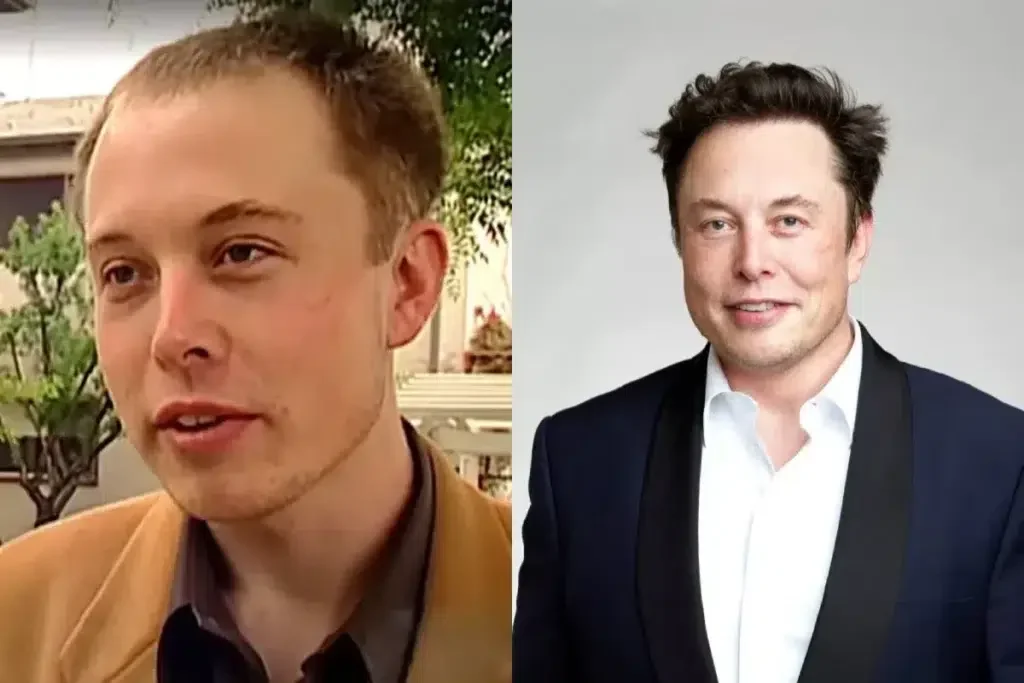
Celebrity “did he get a hair transplant?” debates attract massive attention, but clinically, a photo is not proof. Hair density can look dramatically different based on length, styling, fibers, camera angle, lighting, lens distortion, and even temporary shedding phases related to stress or seasonal cycles. Without verified information or direct clinical assessment, any conclusion remains speculation.
The useful value of such conversations is educational: it should push readers toward the right questions about themselves. What is my pattern of hair loss? Is my donor area strong enough? What hairline design matches my facial proportions? What technique (FUE vs. DHI) and graft strategy is appropriate? Celebrity cases may inspire interest, but outcomes are individualized. “If it worked for him, it will work for me” is one of the most common assumptions that leads to disappointment in real practice.
In other words, the goal is not to diagnose a public figure. The goal is to separate myth from evidence: how hair restoration is planned, what can be measured, what cannot, and why responsible decision-making depends on your own biology, donor capacity, expectations, and risk profile—not a set of viral images.
What Are Hair Plugs and Why Do People Still Talk About Them?
“Hair plugs” is a popular term describing older transplant methods—especially from the 1980s and 1990s—when larger grafts were used. Because those grafts contained multiple hairs in bulky clusters, results could look unnatural (“doll hair” appearance). Modern FUE and DHI transplanting relies on follicular units, including single-hair grafts, which—when properly planned—aim for a natural distribution and hairline.
The term persists for two main reasons. First, many people with older procedures still exist, and their visible results shaped public perception. Second, “hair plugs” remains a highly searched keyword, so it frequently appears in online content. But the more relevant comparison today is not plugs vs. FUE; it is good planning vs. poor planning.
Unnatural outcomes now are usually linked to design mistakes (wrong hairline), poor graft distribution, weak graft handling, or donor mismanagement—not to the modern technique itself. Therefore, the smart evaluation focuses on surgeon expertise, clinic standards, donor strategy, realistic goals, and long-term planning—rather than a single buzzword.
Hair Replacement vs. Hair Implants vs. Hair Transplant: What Do These Terms Mean?
People often search for “hair replacement,” “hair implant,” “hair transplant,” and “hair system” as if they are identical—but they are not. A hair transplant is a surgical procedure that relocates your own follicular units from a donor area to thinning or bald areas. The phrase “hair implant” is commonly used to mean transplant, but medically “implant” often implies placing a foreign material in the body; in true transplants, the tissue is your own.
“Hair replacement” is a broader umbrella term. It may include surgical transplantation as well as non-surgical options like hair systems. A hair system is a prosthetic solution attached to the scalp to cover hair loss. Its advantage is immediate cosmetic coverage; its trade-offs include ongoing maintenance, periodic replacement, and potential scalp irritation in some users.
Clarifying these terms matters because language shapes expectations. If someone believes an “implant” works like a permanent device, they may misunderstand what drives results. In real life, outcomes depend on donor supply, hair-loss pattern, medical planning, surgical quality, and post-op care. The right decision starts by defining your problem accurately—then matching the right solution to your biology and goals.
Hairline Design Through the Elon Musk Lens: What Makes a Result Look Natural?
The hairline is the most critical aesthetic element in hair transplantation. A “natural look” is not a straight line; it is an age-appropriate, facially harmonious design with subtle irregularities and single-hair grafts in the front to create softness. If a very youthful hairline is recreated aggressively in an older patient, it may look unnatural and create long-term risk—especially if hair loss continues behind the transplanted zone, producing an “island” effect.
Celebrity discussions often focus on “before vs. after” hairlines. The clinically useful lens is different: does the hairline complete the facial frame naturally, balance forehead proportions, and avoid a sharp drawn-on edge under harsh lighting? Great planning also accounts for the mid-scalp and crown, projecting future loss and allocating grafts strategically.
So instead of asking “did it work for him?”, translate the question into your own variables: age, loss pattern, donor capacity, facial proportions, and long-term maintenance. Hairline design is the signature of a transplant. When done well, it reduces the “work done” vibe even years later.
FUE or DHI? How Celebrity Comparisons Can Lead to the Wrong Choice
FUE and DHI are widely discussed, but asking “which is better?” is incomplete. FUE is a broader framework where grafts are extracted and then implanted into prepared sites, while DHI emphasizes placing grafts using an implanter pen—often reducing the separation between incision and implantation steps. Yet outcomes depend far more on team skill, graft survival, hairline design, and donor management than on the label.
Celebrity-based decisions can be misleading because public figures often have advantages: elite teams, higher budgets, intensive follow-up, and sometimes multiple sessions. The right approach for you depends on your loss area, target density, hair caliber, existing hair, time tolerance, and long-term planning.
In practice, the decision should look like engineering: how many grafts, where exactly, at what density, angle, and distribution? If these variables are not precisely planned, debating FUE vs. DHI is mostly noise. Strategy first; technique follows.
Post-Transplant Medical Support: Are Finasteride/Minoxidil Necessary?
A transplant relocates donor hairs that are relatively resistant to androgenetic loss, creating a durable shift. However, your native hairs—especially in the mid-scalp and crown—may continue to miniaturize over time. For this reason, many patients benefit from a combined strategy. Finasteride, a 5-alpha-reductase inhibitor, reduces DHT and may slow progression of androgenetic alopecia. Minoxidil can support the growth cycle and improve density.
Are they mandatory? Not universally. Some individuals have stable loss, strong donor supply, and limited target areas. But in younger patients with faster progression or high crown risk, surgery alone may not be a complete long-term solution. Medical support helps preserve the native hair behind the transplanted zone, maintaining a more cohesive result.
The key is personalized risk-benefit evaluation: side-effect tolerance, medical history, and patient goals matter. The most responsible plan is built with a clinician using objective assessment—not generic online rules.
Hair Transplant Risks: Donor Management, Shock Loss, and Scarring
Despite marketing narratives, hair transplantation is a surgical procedure with real risks. Over-harvesting the donor area can reduce future options and create visible thinning in the back or sides. Shock loss may occur—especially when implanting among existing hairs. It is often temporary, but in some individuals it can accelerate miniaturization of vulnerable hairs. Scarring also matters: FUE can leave dot scars; FUT can leave a linear scar—skin type and healing response are key variables.
These risks are managed through planning and execution. Donor mapping should aim for an “optimal” strategy rather than chasing maximum graft counts. Post-operative care reduces infection risk and supports recovery. Equally important is expectation management: transplantation increases coverage, but it does not replicate unlimited native density.
Ultimately, hair restoration is long-term resource management. Your donor supply is biological capital—once spent, it does not regenerate. Responsible strategy protects that capital.
The “Hair Implant” Myth: If There Is No Implant, Why Is It Called That?
The phrase “hair implant” is common in marketing because it sounds high-tech and permanent. But in real hair transplantation, no foreign device is implanted. Your own follicular units are relocated from the donor area to the recipient area. This distinction matters because success depends on graft viability and adaptation—not on a manufactured implant.
The term can create false certainty: people may assume “if it’s implanted, it must work.” In reality, survival depends on extraction quality, time out of body, hydration, implantation angles, handling technique, and scalp conditions. Additionally, the hormonal and genetic basis of hair loss continues, so the “done forever” implication is misleading.
Clean terminology supports clean expectations. Transplantation is surgical reconstruction using your own tissue. Hair systems are non-surgical coverage solutions. The best choice depends on goals, budget, maintenance tolerance, and biology—not on buzzwords.
Why Is the Crown So Challenging? The Most Missed Point in Celebrity Hair Discussions
The crown is one of the hardest areas to plan in hair transplantation. Hair grows in a spiral whorl pattern, and natural appearance requires precise angle and direction matching. The crown also often needs more grafts to create visible density because hairs disperse in multiple directions—so the same graft count looks denser in the hairline than in the crown.
In celebrity photos, the crown is frequently unclear or distorted by lighting, which leads to misleading interpretations. Clinically, crown planning must be tied to future-loss projection. Aggressive crown coverage in a young patient may consume graft reserves and create problems if the bald area expands over time.
That is why crown work should be planned for long-term cohesion, not short-term optics. The strategy is to build realistic density and correct direction architecture without exhausting donor supply.
Realistic Expectations: Does a Hair Transplant “Rejuvenate,” or Reframe the Face?
The psychological impact of hair restoration can be significant, and many people report looking “younger.” Clinically, what often happens is reframing: the forehead proportion changes, facial balance improves, and the overall perception becomes more youthful. Understanding this matters because transplantation does not erase every sign of aging. Skin quality, body composition, expression lines, and general health still shape appearance.
Celebrity “rejuvenation” is often multi-factorial: grooming, styling, weight changes, professional care, and media lighting can amplify the effect. Therefore, the right mindset is not a miracle makeover, but a structured improvement in facial framing and hair coverage.
The highest satisfaction comes from a plan built on natural hairline design, realistic coverage, donor preservation, and—when appropriate—medical support. Sustainability beats hype.