




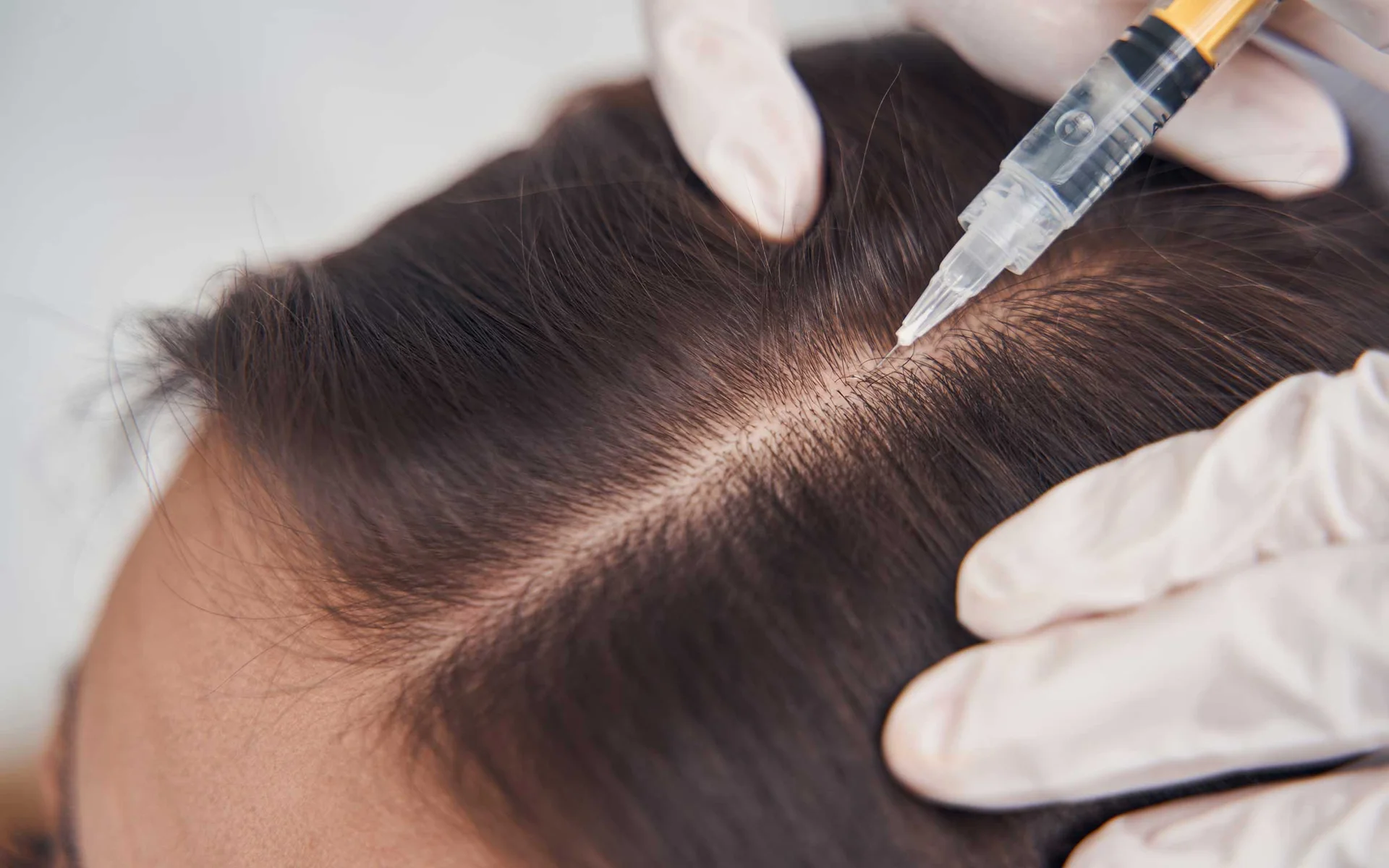
"People lose hair all the time as high as 100 strands per day and naturally they grow back."
Hair Transplantation

Hair loss prevalence

As much as 85% of men experience hair loss in their lifetime. When there is a treatable reason for the hair loss, the condition becomes faint with proper treatment solving the underlying problem.

Hair loss reasons

Androgenic alopecia  

Androgenic alopecia comes as a heritage through parental genes. The X chromosome is the carrier of the related gene. While women should own two responsible genes on both chromosomes, men having only one responsible gene suffer from this condition. It is the most common cause, up to 95%, of male pattern baldness.

Male pattern baldness has a distinct shape; a receding hairline which progresses around the crown of the head and leaves this area hairless and eventually the whole head when there is a narrow line of hair above ears circulating to the back of the head. In this pattern, hair follicles are exaggeratedly sensitive to a hormone called dihydrotestosterone (DHT) which makes them smaller, and, as a result, the growing hair tend to be finer, thinner, and shorter and eventually invisible. 

Alopecia areata

Alopecia areata is a post-trauma condition which manifests after a traumatic event or shock, or in relation with internal diseases. This problem is often solved spontaneously or by drug help. In rare cases, it permanently stays which should be treated with medical procedures such as hair transplant.

Cicatricial alopecia

Usually, accidental or infectious wounds result in cicatricial alopecia; an irreversible and permanent cause of hair loss.

Immunologic disorders such as discoid lupus erythematosus (DLE) and morphea can cause cicatricial alopecia as well.

Chronic deliberating diseases

Acute physical or emotional trauma

Certain medications such as:

  • Blood thinners
  • Drugs for arthritis
  • Retinoids for acne treatment
  • Anabolic steroids
  • Antidepressants 

Hair transplantation

Description
Hair transplantation is the surgical technique of transplanting hair follicles called the donor area from a hairy body part, usually the back of the head, to the bald or bald parts where they are collected and known as the recipient area. This technique is primarily used to treat male pattern baldness.
In this minimally invasive procedure, hair follicles that are genetically resistant to baldness are harvested into grafts, such as the back of the head, and transplanted into the bald scalp. Additionally, hair transplantation can be used to restore eyelashes, eyebrows, beard, chest and pubic hair, and/or fill in scars due to surgical procedures such as facelifts and previous hair transplants. Donor hair can be harvested in two different ways: strip harvesting or Follicular unit transplantation (FUT) and follicular unit extraction (FUE).
Hair naturally grows in groups of 1 to 4 strands within follicular units. Current techniques harvest and transplant these follicular units in their natural form; This results in a natural look that mimics the original hair shape and texture.
Procedure steps
  •  Preoperative evaluation and planning
Throughout an initial consultation, the surgeon analyzes the patient's scalp, discusses the preferences, advises the patient on the best approach (e.g., the number, single vs multiple, of sessions), and explains what result might be reasonable to expect. During the evaluation, laxometers are used to measure the looseness or more specifically the laxity, of the scalp. Moreover, pre-operative folliscopy helps us to know the actual existing density of the hair, so that post-operative results of newly transplanted grafts can be precisely predicted.
When the donor's hair is weak, pre-operative topical minoxidil application can be beneficial.
For at least one week prior to the operation, the patient should decline any medicine such as aspirin or other anticoagulant drugs that might increase the risk of intra-operative bleeding and consequently decrease grafting quality.
Alcohol and smoking can contribute to poor graft survival.
Post-operative antibiotics are commonly prescribed to prevent wound or graft infections.
  • Harvesting
Hair transplant operations are performed on an outpatient basis with mild sedation and local anesthesia. Before harvesting the donor site, the scalp is shampooed and treated with an antibacterial agent. Today, there are two harvesting methods, Today, there are two main ways, each comes with its own advantages and disadvantages, by which donor grafts are extracted; follicular unit extraction and strip excision harvesting. However, regardless of the harvesting method, proper extraction of the hair follicle is paramount to ensure the viability of the transplanted hair and avoid transection (i.e., cutting of the hair shaft from the hair follicles). Hair follicles grow slightly angled and the transplanted tissue should be removed carefully at the corresponding angle. In FUT, the surgeon harvests a strip of the skin of 1-1.5 x 15-30 cm in size containing all-natural skin and hair cells. While the surgeon is closing the resulting wound, assistants begin to dissect individual follicular unit grafts from the collected strip. They work with binocular stereomicroscopes and remove the uncalled-for tissues without damaging the follicular cells. However, in FUE, only follicular units, containing a cluster of 1 to 4 follicles excluding all other cell types, are removed by the surgeon under local anesthesia. For the micron-sized procedure, tiny punches of 0.6 – 1 millimeter in diameter are used.

  • Planting

After harvesting, the surgeon uses small microblades or very fine needles to puncture the sites designated for the follicular planting on the recipient scalp and placing the harvested follicles at a predetermined density and pattern. This time-consuming step can be performed in either single or multiple steps and it is mostly done by the technicians.

Expected outcomes

FUE gives very natural results and there is no linear incision or scar on the back of the head. Any post-operative pain or discomfort is unusual, and recovery takes less than 7 days.


How long do hair transplants last?

Initially between the first and third month after the surgery, the planted follicles totally shed according to their age and then around the sixth month after a hair transplant session, the hair on the recipient site begins to take a natural appearance and it is going to continue to grow for a lifetime. 
The wound of the donor site shrinks to a small barely noticeable incision line which is completely hidden behind the surrounding hair.

What is the best age for hair transplant?

Doctors recommended hair transplant for individuals over the age of 25 years old because the hair loss process may not be finalized up to this age; however, androgenic alopecia may continue after 25 years old and, therefore, additional transplants may be required in the future.

Is it risky to have hair transplant?

As the hair transplant operation is done with local anesthesia, there are few risk factors concerning the medical team though in rare cases serious complications including allergic reactions, bleeding, infections, and hypertrophic scar or keloid formation may also develop. Itching or loss of sensation at the site of surgery due to the nerve damage may also occur too.

What is the success rate of hair transplant?

A success rate between 85 and 95% has been demonstrated in most of the surveys.