



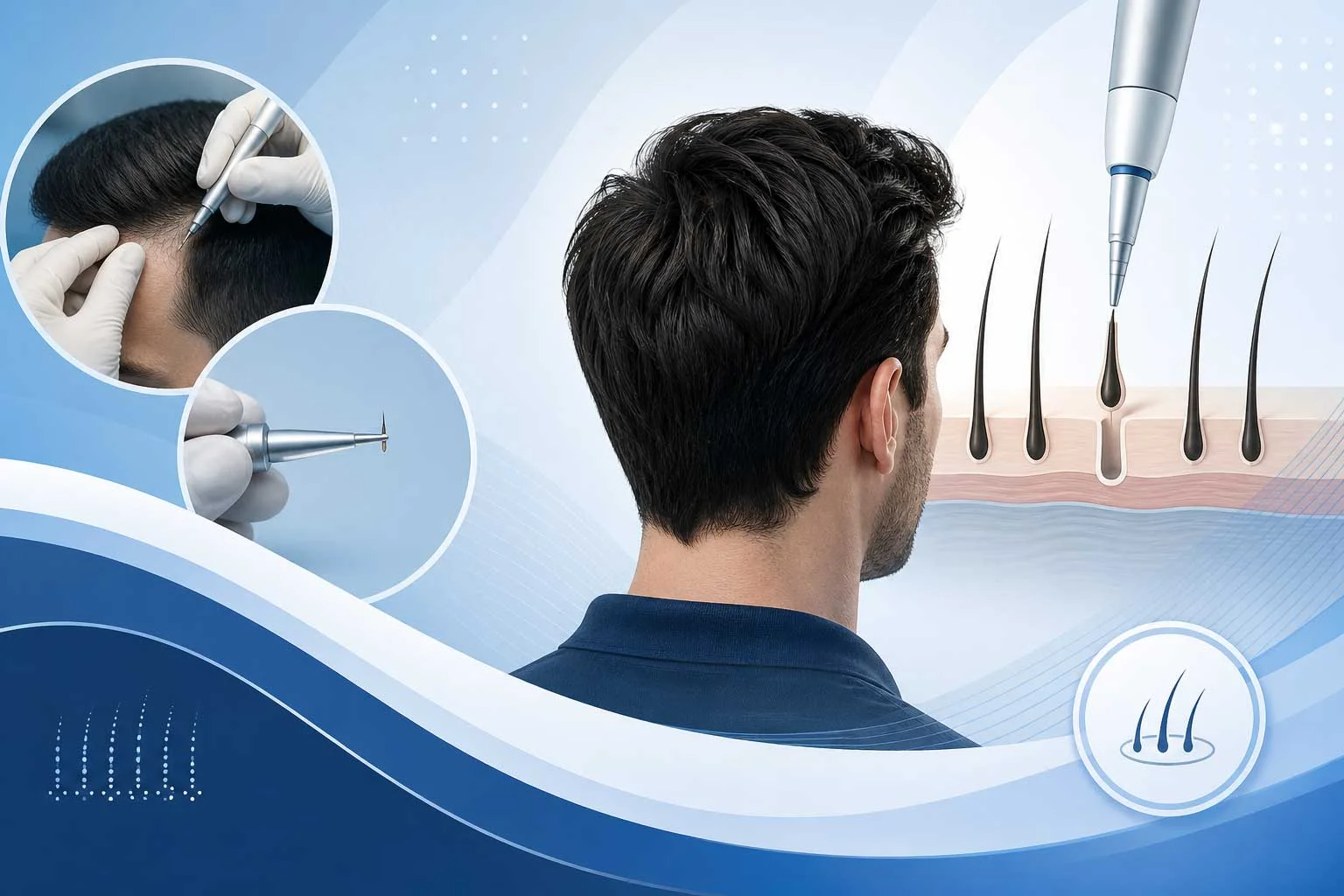
What Is Unshaven Hair Transplant?
Unshaven hair transplant is a modern technique performed without shaving the donor or recipient area. It is ideal for individuals who do not want to interrupt their daily life. Hair follicles are extracted and implanted individually without cutting existing hair. This ensures a natural look immediately after the procedure. The technique is commonly performed using DHI or micro FUE methods. It is especially preferred by women and professionals who want a discreet procedure.
How Is Unshaven Hair Transplant Performed?
In this technique, hair follicles are extracted individually using micro motors or manual punches without shaving. They are then implanted using special implanter pens. The procedure may take longer compared to traditional methods due to working between existing hair. The surgeon’s experience is crucial for achieving natural results. Proper angle and direction are carefully planned. The procedure is typically performed under local anesthesia.
Who Is Suitable for This Procedure?
This method is ideal for women, public figures, and professionals who want to maintain their appearance. It works best for individuals with localized hair loss rather than extensive baldness. Patients with a strong donor area achieve better results. In cases of large bald areas, traditional methods may be more appropriate. A detailed analysis is necessary before the procedure.
DHI vs FUE: What Is the Difference?
In DHI, follicles are implanted directly, whereas FUE involves opening channels before implantation. For unshaven procedures, DHI is usually preferred as it minimizes damage to existing hair. It allows for more precise and dense placement. However, FUE may also be used in certain cases. The choice depends on the patient’s condition.
What Are the Advantages?
The biggest advantage is preserving natural appearance without shaving. Patients can return to work and social life quickly. It is ideal for those seeking discretion. It also offers psychological comfort. The procedure is barely noticeable from the outside, increasing its popularity.
Are There Any Disadvantages?
The procedure takes longer and is more expensive than traditional methods. It may not be suitable for large bald areas. It requires high precision and expertise. Incorrect application may damage existing hair. Therefore, experienced clinics should be preferred.
How Is the Recovery Process?
The recovery process is generally fast. Mild scabbing may occur in the first few days. Healing is mostly complete within 7–10 days. Since the hair is not shaved, the process is less noticeable. New hair growth begins after 3 months, with full results in 6–12 months.
Post-Procedure Care
Proper washing instructions must be followed. Avoid sun exposure and intense exercise. Use prescribed lotions and shampoos regularly. Sensitivity may occur during the first weeks. Proper care directly affects the final results.
When Are Results Visible?
Initial results appear after 3 months. Noticeable improvement occurs by 6 months, with final results at 12 months. Hair type and aftercare influence this timeline. Patience is essential as results vary by individual.
What Affects the Cost?
Costs vary depending on technique, graft count, and clinic expertise. Unshaven methods are generally more expensive due to higher precision. Location and medical team quality also influence pricing.