






Visiting Researcher&Lecturer - University College London, Mechanical Engineering and Faculty of Medicine, UK
Visiting Lecturer - University of Aveiro, Faculty of Biomedical Engineering, Portugal
What is measles?
Measles is an acute, systemic infectious disease transmitted through the respiratory route, caused by a single-stranded RNA virus known as the measles virus. Belonging to the Paramyxoviridae family, it is considered one of the most contagious pathogens known in humans. The illness typically begins with fever and upper respiratory symptoms and then progresses to a characteristic rash. However, measles is not merely “a rash disease.” Its real danger lies in the profound and long-lasting suppression it can create in the immune system.
After entering the body, the virus targets immune cells and particularly weakens immune memory. This can leave a person vulnerable even to infections they were previously protected against. In the scientific literature, this phenomenon is described as “immune amnesia.” Individuals who have had measles may become more susceptible to pneumonia, diarrhea, and other infections for months—or even years—after recovery.
According to the World Health Organization, measles can be fatal in unvaccinated populations, especially in children under five years of age. Outbreaks can occur even in high-income countries when vaccination coverage declines. In this respect, measles is among the leading “returning diseases” in modern societies—diseases that come back because they are forgotten. Preventing measles cannot rely on individual protection alone; high community vaccination coverage is essential.
How does the measles virus enter the body and spread?
The measles virus enters the body through the respiratory tract. It spreads via microscopic droplets released into the air when an infected person coughs, sneezes, or talks. One of the most dangerous features of the virus is its ability to remain viable in the air for up to two hours. This means transmission can continue even after a person with measles has left the room.
After reaching the respiratory tract, the virus first settles in the upper respiratory epithelium and begins to replicate. It then enters the bloodstream via the lymphatic system and disseminates throughout the body. During this spread, immune cells are targeted—especially dendritic cells and lymphocytes. This process weakens the immune response and contributes to the systemic nature of the disease.
Measles is extraordinarily contagious. In unvaccinated, non-immune individuals, simply being in the same environment as a person with measles is often sufficient to cause infection. Epidemiological studies estimate the basic reproduction number (R0) of measles to be between 12 and 18. This means one infected person may infect 12 to 18 others. For this reason, measles has one of the highest herd immunity thresholds among infectious diseases.
Why is measles so contagious?
The main reason measles is so contagious is its ability to remain airborne and cause infection even at very low doses. While many respiratory viruses require close contact, for measles, being in the same indoor space can be enough. In addition, the virus is highly efficient at binding to host cells.
Another key factor is that measles becomes contagious days before the rash appears. This allows the disease to spread unnoticed. While a person may not yet realize they have measles, they can infect many others.
As the proportion of non-immune individuals increases in a community, measles outbreaks become inevitable. Therefore, measles is not controlled primarily through individual immunity but through community (herd) immunity. Scientific evidence clearly shows that vaccination coverage falling below 95% leads to outbreaks.
What are the first symptoms of measles?
The incubation period of measles is typically 10–14 days. The disease begins with high fever, fatigue, cough, runny nose, and red, irritated eyes. This phase is called the prodromal period. Because the symptoms resemble influenza, the illness is often not recognized at first.
In this stage, the most important measles-specific finding is the presence of Koplik spots, seen on the inner cheek mucosa. These are small whitish lesions with a reddish base and are highly valuable for clinical diagnosis.
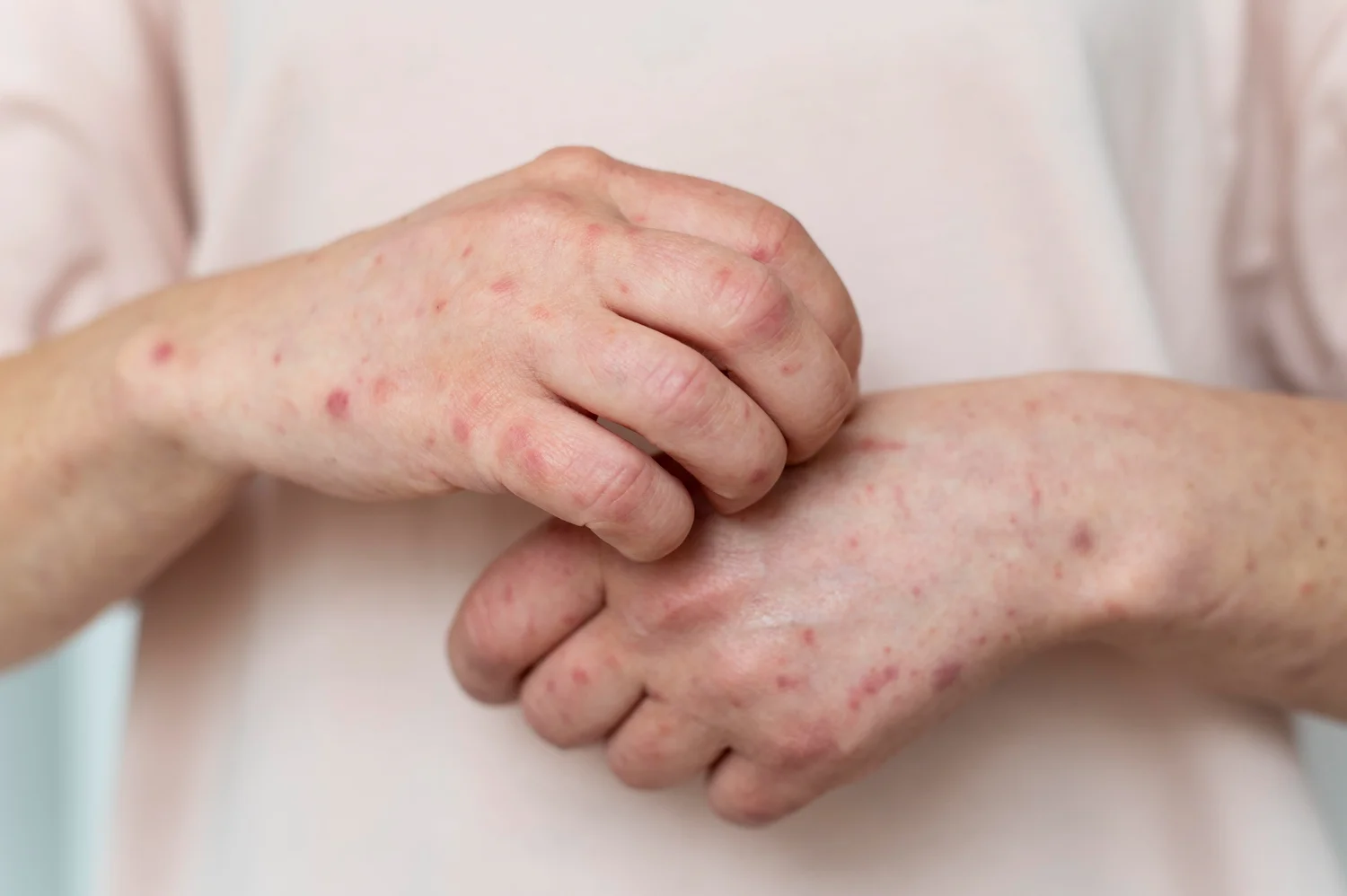
The prodromal stage is followed by the rash phase. The rash usually starts on the face and behind the ears, then spreads to the trunk and limbs. Fever often rises further when the rash appears. This pattern constitutes the typical course of measles—though symptom severity varies from person to person.
Why is measles dangerous for children?
In children, measles may be more severe because the immune system has not yet fully matured. The most common complications include pneumonia, middle ear infection, and severe diarrhea. These complications are among the leading causes of measles-related deaths, particularly in developing countries.
One of the most feared complications is encephalitis, an inflammation of the brain tissue that can lead to permanent neurological damage, intellectual disability, or death. In addition, there is a risk of a fatal neurological disease called Subacute Sclerosing Panencephalitis (SSPE), which may appear years after measles infection.
Immune weakening after measles can cause subsequent infections to be more severe. For these reasons, measles is far too serious to be underestimated in child health.
How does measles progress in adults?
In adults, measles often runs a more severe course than in children. High fever tends to last longer, and the risk of pneumonia is higher. Liver involvement, low platelet count, and profound fatigue are also more common in adults.
In pregnant women, measles increases the risks of miscarriage, preterm birth, and maternal death. Therefore, evaluating immunity status in adults who were not vaccinated in childhood is critically important.
How is measles diagnosed?
Measles is suspected based on clinical findings, but definitive diagnosis is made through laboratory tests. Detecting measles IgM antibodies in blood is the most common approach. PCR testing can also identify the genetic material of the virus.
Early diagnosis is vital for isolating the patient and preventing transmission.
Is there a definitive treatment for measles?
There is currently no specific antiviral treatment that directly eliminates the measles virus. Management is supportive and focuses on alleviating symptoms and preventing complications. Core components include fever control, adequate fluid intake, nutritional support, and treatment of secondary bacterial infections when necessary. Complications such as pneumonia, diarrhea, and otitis media—particularly common in children—require close monitoring. The World Health Organization recommends vitamin A supplementation for children with measles, as vitamin A deficiency is associated with more severe disease and serious outcomes, including blindness. For these reasons, the primary goal in measles is prevention rather than treatment.
How does the measles vaccine work?
The measles vaccine contains a live but weakened (attenuated) form of the virus. Although it cannot cause disease, it safely stimulates the immune system in a manner similar to natural infection. The body produces antibodies and develops immunological memory, enabling a rapid and effective response upon future exposure to the virus. With two doses of the vaccine, protective efficacy reaches approximately 97%, and immunity is typically long-lasting, often lifelong. This high level of effectiveness makes the measles vaccine one of the most powerful tools in public health.
Is the measles vaccine safe?
Yes. The measles vaccine has been used worldwide for decades and its safety has been extensively demonstrated through numerous scientific studies. The most common side effects are mild and temporary, such as low-grade fever, redness at the injection site, or a brief rash. Serious adverse events are extremely rare, occurring at a rate of only a few cases per millions of doses administered. In contrast, measles itself can lead to severe complications, including pneumonia, encephalitis, blindness, and death. Scientific evaluations clearly show that the benefits of vaccination far outweigh the potential risks.
Why are unvaccinated individuals at risk?
Unvaccinated individuals represent the highest-risk group for measles infection. Measles is one of the most contagious viral diseases, spreading rapidly among those without immunity. Nearly all measles outbreaks occur in communities with low vaccination coverage. Remaining unvaccinated endangers not only the individual but also vulnerable populations such as infants, pregnant women, and people with weakened immune systems. Community (herd) immunity can only be achieved through high vaccination rates. Therefore, choosing not to vaccinate is not merely a personal decision but a significant public health risk.
Why is measles dangerous during pregnancy?
Measles infection during pregnancy poses serious risks for both the mother and the fetus. Pregnant individuals may experience severe complications such as pneumonia and require hospitalization. For the fetus, measles increases the risk of miscarriage, preterm birth, and low birth weight. Because the measles vaccine is a live vaccine, it cannot be administered during pregnancy. Protection must therefore be ensured prior to conception. Assessing immunity status before pregnancy is essential to safeguard both maternal health and fetal outcomes.
Can measles occur more than once?
After natural infection or complete vaccination, individuals generally develop lifelong immunity to measles. The immune system retains a strong memory of the virus and mounts a rapid defensive response upon re-exposure. As a result, reinfection is extremely rare. In very uncommon cases—such as in individuals with severe immune suppression or incomplete vaccination—repeat infection may occur. However, measles is not considered a recurrent disease in the general population, underscoring the robustness of immunity conferred by vaccination or natural infection.
Why is measles re-emerging in Türkiye?
In recent years, an increase in measles cases has been observed in Türkiye. The primary contributing factors include vaccine hesitancy, incomplete immunization, migration, and global population movement. Declining vaccination rates weaken herd immunity and create conditions favorable for viral spread. Measles does not recognize borders; low vaccination coverage in one region can affect others. Sustaining routine immunization programs and rebuilding public trust in vaccines are therefore critical to reducing outbreak risk.
What does measles teach us?
Measles clearly demonstrates that scientific solutions are effective only when they are embraced by society. Vaccination protects not just individuals but entire communities, serving as a cornerstone of public health. Even diseases considered controlled can quickly return when vaccination coverage declines. Measles reminds us of the high cost of neglect in health systems and the necessity of sustained, collective responsibility. Science alone is insufficient without continuity and societal commitment. Vaccination is not merely an individual choice; it is a shared obligation.
Visiting Researcher&Lecturer - University College London, Mechanical Engineering and Faculty of Medicine, UK
Visiting Lecturer - University of Aveiro, Faculty of Biomedical Engineering, Portugal