





What is Fermentation?
The
relationship between nutrition and human health was first emphasized by
Hippocrates with his famous saying, “Let food be thy medicine, and medicine
be thy food.”
Today, due to
the increasing prevalence of cardiovascular diseases, circulatory system
disorders, and obesity-related conditions, consumers have been turning more
toward functional foods and dietary supplements. In recent years, there has
also been a growing interest in the consumption of traditional fermented foods.
Fermentation
has been used for centuries as a method to extend the shelf life of foods and
to enhance their nutritional quality. The word “fermentation” comes from the
Latin term “fervere,” meaning “to boil.” Microorganisms break down
carbohydrates and other macromolecules into simpler compounds, resulting in the
production of various beneficial metabolites, including B vitamins, minerals,
and Omega-3 fatty acids.
Health Benefits of Fermented Foods
A wide variety
of fermented products are produced both worldwide and in our country. Some
examples include dairy (kefir, dried strained yoghurt), grains (boza, tarhana),
meat (sucuk, pastirma), fish (fish sauce), soy (soy sauce, tempeh), as well as
vegetables and fruits (kimchi, sauerkraut, sunki).
Fermented
products are recognized for their antimicrobial, antioxidant, probiotic,
prebiotic, cholesterol-lowering, functional, and therapeutic effects.
It has also
been noted that fermented foods positively influence the human gut microbiota
and various parts of the body, thereby supporting a healthy life and helping to
protect against various diseases. In particular, the consumption of fermented
foods containing live microorganisms has recently emerged as a key dietary
strategy for enhancing human health. When examined in detail in terms of their
content and health benefits, some of these products stand out as remarkable
examples.
Hardaliye
Hardaliye is a
non-alcoholic, fermented Turkish beverage produced through lactic acid
fermentation of red and black grapes, mustard seeds, and sour cherry leaves.
Fermentation enhances both the aroma and texture while enriching the
nutritional value of the food. Thanks to its antioxidant and phenolic content,
Hardaliye reduces lipid peroxidation parameters and serum homocysteine
concentrations. The resveratrol and flavonoids it contains have positive
effects on the cardiovascular system, helping regulate blood pressure and blood
sugar levels.
Kefir
Kefir is a fermented dairy product produced by adding kefir grains to cow’s, sheep’s, goat’s, or mare’s milk, characterized by a mildly acidic and slightly sour taste. The main feature of kefir is that it is a probiotic itself and is more resistant to other probiotics. Kefir is rich in tryptophan, an amino acid, and contains high levels of calcium and potassium. It also contains vitamins B12, B1, biotin, and vitamin K. In addition to yeasts, kefir contains beneficial bacteria, including Bifidobacteria, Lactobacilli, Leuconostoc, Acetobacter, and Streptococcus. Kefir has anticarcinogenic, antiallergic, cholesterol-lowering, blood glucose-regulating, and antimicrobial properties, which can reduce lactose intolerance. Additionally, it has positive effects on blood pressure, the digestive system, and the immune system.
Tarhana
Tarhana is prepared by kneading yoghurt, wheat flour, bread yeast, spices (salt and red pepper), and vegetables (tomatoes and onions), and then leaving the mixture to ferment for a week. The resulting fresh tarhana dough, produced through the fermentation of yoghurt bacteria and yeasts, can be dried in the sun or in a dehydrator to make it storable. In addition to its prebiotic and probiotic content, tarhana is rich in vitamins and minerals. Its high fibre content helps regulate intestinal peristalsis and supports the digestive system.
Pickles
Pickles made through lactic acid fermentation have health-protective effects. It has been reported that regular consumption of pickles is inversely associated with asthma, skin problems, and immune system-related diseases in children.
Kombucha
Kombucha tea is one of the most widely consumed non-alcoholic traditional fermented beverages in the world, obtained by fermenting sugar with acetic acid bacteria and yeasts. It is reported to support the digestive system and liver functions, enhance immunity, reduce the risk of obesity, and provide relief for patients with bronchitis and asthma. Kombucha also has positive effects against inflammation, edema, coronary and heart diseases, and stress-related health problems. In addition to all these benefits, it has been reported to possess anticancer, antimicrobial, and antioxidant properties.
Commercially
produced fermented foods mostly serve as carriers for probiotic bacteria.
However, despite growing interest in these foods and their potential public
health benefits, significant confusion remains regarding which fermented foods
actually contain live microorganisms and the extent to which these
microorganisms affect the gut microbiome.
Microorganisms That May Emerge During Fermentation and Precautions
In traditional fermented foods, in addition to beneficial bacteria that contribute to fermentation, the growth of pathogenic and spoilage-causing bacteria must also be monitored.
Biogenic
amines, particularly in protein-rich fermented foods, can form during
fermentation and may serve as indicators of product freshness. However,
biogenic amines formed in fermented foods can trigger allergic reactions, and
excessive intake can lead to toxic effects. For example, in traditional
cheeses, histamine is considered the most risky biogenic amine. Histamine can negatively
impact product quality by altering taste, aroma, and texture. Preventing the
formation of biogenic amines in cheese can be effectively achieved through
improved hygiene and storage conditions, as well as the selection of
appropriate starter cultures.
Quality Indicators During Fermentation
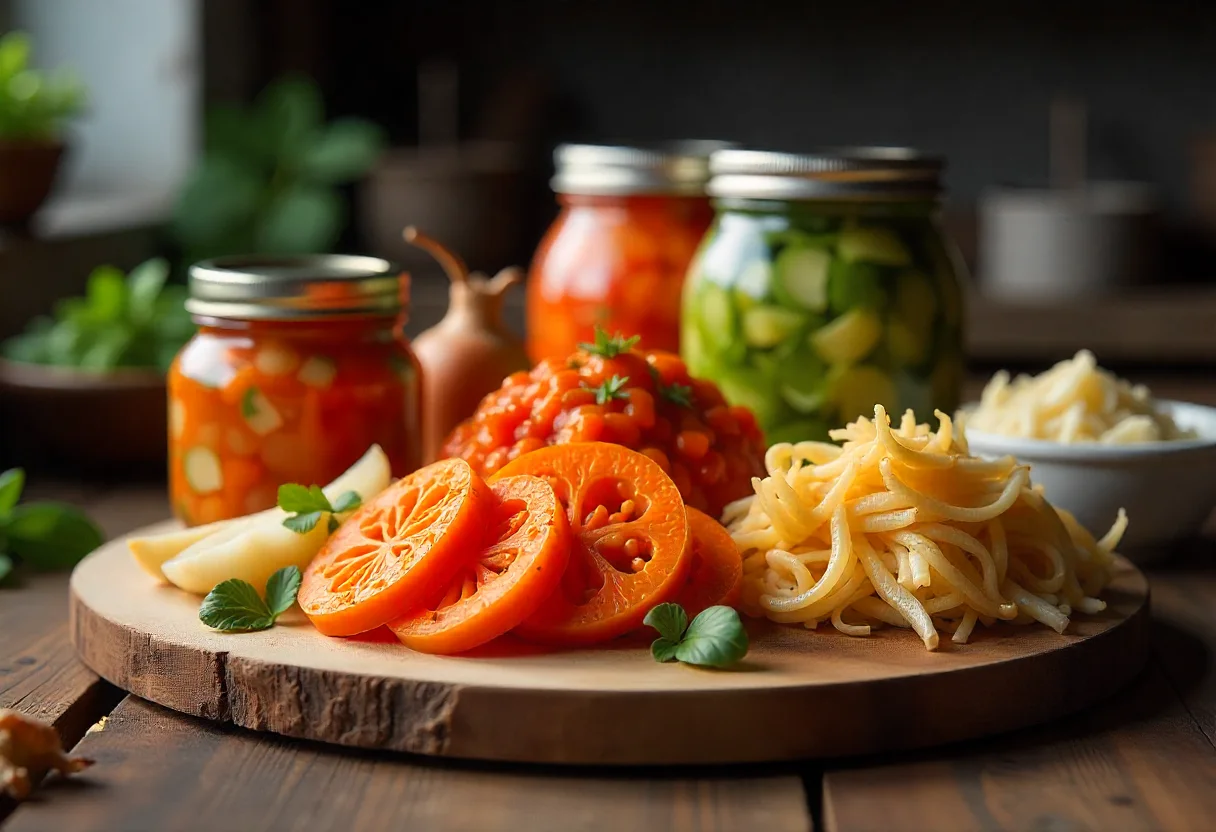
In homemade fermented vegetable products, such as pickles and kimchi, the changes that occur during fermentation serve as indicators of quality. For optimal fermentation, it is essential to prepare high-quality brine, use filtered water, select high-quality vegetables, and utilise suitable equipment. In a healthy fermentation, pickle brine usually becomes cloudy and develops a slightly sour aroma; in contrast, a sharp, unpleasant odor or mold growth is a serious sign of spoilage.
In homemade
fermented dairy products such as kefir, yoghurt, and strained yoghurt, healthy
fermentation is typically indicated by a mild sour and yeasty aroma. However,
over-fermentation, poor hygiene, or improper storage conditions can lead to
spoilage. This is recognizable through visual and olfactory signs such as mold,
sharp sour or ammonia-like odors, pink, blue, green, or black spots, and
swollen packaging. These signs indicate that the product is unsafe and should
not be consumed.
Healthy
fermentation in homemade tarhana is also characterized by a mild sour and
yeasty aroma. Spoiled tarhana may exhibit sharp, moldy, or musty odors; white,
green, or black spots; and changes in color and texture. These signs indicate
that the product is unsafe and should not be consumed.
During the
fermentation of homemade kumis, a slightly sour and yeasty aroma is considered
normal. However, undesired changes in sensory characteristics may indicate that
the product is of poor quality or has spoiled.
Recommendations for Safe Fermentation
- All
surfaces that come into contact with food, the preparer’s hands, and the
containers used for fermentation should be carefully washed and dried.
This practice supports the growth of desired fermentative microorganisms
while helping to reduce the number of other bacteria and yeasts.
- Factors
such as pH, duration, and temperature are critical for achieving the
desired flavor and texture in fermented products. For fermented vegetables
or yoghurt, the product’s pH should be below 4.6. This value can be easily
tested using commercial pH strips or measurement devices.
- The raw
materials used in fermentation must be fresh and clean. To prevent
spoilage and the introduction of harmful microorganisms into yoghurt, it
is recommended to use commercially or home-pasteurised milk. For
vegetables, select fresh, unspoiled, and disease-free products.
High-quality raw materials enhance both the success of fermentation and
food safety.
- Since
fermented vegetables are often active and bubbly, when using a wide-mouth
jar, it should not be overfilled, leaving about 5 cm of headspace. If
brining is preferred, the jar should be filled to the top, as excessive
headspace can lead to oxygen accumulation, causing mold or foam formation.
Additionally, non-iodized salt should be used in the brine.
References
1. Augustin, M. A., Hartley, C. J., Maloney,
G., & Tyndall, S. (2024). Innovation in
precision fermentation for food
ingredients. Critical reviews in food science and
nutrition, 64(18), 6218-6238.
https://www.tandfonline.com/doi/full/10.1080/10408398.2023.2166014
2. Aygün, O. (2003). Biyojen aminler-süt ve
süt ürünlerindeki varlığı ve önemi.
https://dergipark.org.tr/en/download/article-file/144545
3. BAYAT, G. (2020). The oldest fermented
Turkish beverage in traditional Turkish cuisine:
Koumiss (Kımız). Journal of Tourism &
Gastronomy Studies, 8(2), 816-824.
https://www.researchgate.net/publication/342568077_The_Oldest_Fermented_Turki
sh_Beverage_in_Traditional_Turkish_Cuisine_Koumiss_Kimiz
4. Büyük, S., & Marangoz, B. (2018).
Peynirlerde biyojen aminler. Aydın Gastronomy,
2(2), 35-44. https://dergipark.org.tr/en/pub/aydingas/issue/39037/457629
5. Çeltik, C., Tayfun, K., Müslümanoğlu, A.Y
.(2022). Simbiyotik Özellikli Gıdalar. Journal of
Integrative and Anatolian Medicine. 3(2): 3
– 12
https://dergipark.org.tr/en/pub/batd/article/1058749
6. Dimidi, E., Cox, S. R., Rossi, M., &
Whelan, K. (2019). Fermented foods: definitions
and characteristics, impact on the gut
microbiota and effects on gastrointestinal
health and disease. Nutrients, 11(8), 1806.
https://pubmed.ncbi.nlm.nih.gov/31387262/
7. Gökırmaklı, Ç., Üçgül, B., & Seydim, Z.
(2021). FONKSİYONEL GIDA KAVRAMINA YENİ
BİR BAKIŞ: POSTBİYOTİKLER. Gıda, 46(4),
872-882
https://dergipark.org.tr/tr/download/article-file/1559191
8. Kabak, B., & Dobson, A. D. (2011). An
introduction to the traditional fermented foods
and beverages of Turkey. Critical reviews
in food science and nutrition, 51(3), 248-260.
https://www.tandfonline.com/doi/abs/10.1080/10408390903569640
9. Karaçıl, M.Ş., Tek, N. A.(2013). Dünyada
Üretilen Fermente Ürünler: Tarihsel Süreç ve
Sağlık ile İlişkileri. Journal of
Agricultural Faculty of Uludag University. (27) 2, 163-173
https://dergipark.org.tr/tr/download/article-file/154205
10. Karaçil, M. Ş., & Tek, N. A. (2013).
Dünyada üretilen fermente ürünler: tarihsel süreç
ve sağlık ile ilişkileri. Uludağ
Üniversitesi Ziraat Fakültesi Dergisi, 27(2), 163-174.
https://dergipark.org.tr/tr/download/article-file/154205
11. Krug, D. (2021). Taking a New Look at
Fermented Foods. Family and Consumer
Sciences, K-State Research and Extension.
https://bookstore.ksre.ksu.edu/pubs/taking-a-new-look-at-fermented-foods-fact-she
et_MF3491.pdf
12. Lin, X., Tang, Y ., Hu, Y ., Lu, Y ., Sun,
Q., Lv, Y ., ... & Chi, Y . (2021). Sodium reduction in
traditional fermented foods: Challenges,
strategies, and perspectives. Journal of
Agricultural and Food Chemistry, 69(29),
8065-8080.
https://pubs.acs.org/doi/abs/10.1021/acs.jafc.1c0168713.
Marco, ML, Heeney, D., Binda, S., Cifelli, CJ, Cotter,
PD, Foligné, B. ve diğerleri (2017).
Fermente gıdaların sağlık yararları:
mikrobiyota ve ötesi. Curr. Opin. Biotechnol. 44,
94–102. https://www.sciencedirect.com/science/article/abs/pii/S095816691630266X
14. Nummer, Brian A. "Evde Yoğurt
Fermentesi - Kaliforniya Üniversitesi, Davis." Ulusal
Evde Gıda Koruma Merkezi, Ekim 2002.
https://ucfoodsafety.ucdavis.edu/sites/g/files/dgvnsk7366/files/inline-files/295482.p
df
15. Özkan, K.(2016). Fermantasyonun Bazı
Sebzelerin Biyoaktif Özelliklerine Etkisi. Yüksek
Lisans Tezi.
https://tez.yok.gov.tr/UlusalTezMerkezi/tezDetay.jsp?id=RSBrHuG8UFR1290SNkao0w
&no=XQm8mrkbW01Oct4GIgYV5g
16. Palamutoğlu, R., Ġnce Palamutoğlu, M.,
Kasnak, C., Özen, B. (2022). Fermente
Gıdaların Tüketimi ve Bu Gıdalar Hakkında
Bilgi Düzeylerinin Sağlık Harcamalarına ve
Ekonomiye Olan Etkisi. Journal of Yasar
University. (17)65, 236- 248
https://dergipark.org.tr/en/download/article-file/2195729
17. Pekis.net. (2025, Temmuz 10). How to tell
if kefir has gone bad: signs of spoilage and
safe storage tips. Pekis.net.
https://pekis.net/article/how-tell-if-kefir-has-gone-bad-signs-spoilage-and-safe-stora
ge-tips
18. Sivamaruthi BS, Kesika P ., Chaiyasut C.
(2018). Fermente gıdalardaki toksinler:
yaygınlık ve önlemeler - mini bir inceleme.
Toksinler 11:4. 10.3390/toxins11010004
https://www.mdpi.com/2072-6651/11/1/4
19. Slashinski, M. J., McCurdy, S. A.,
Achenbaum, L. S., Whitney, S. N., & McGuire, A. L.
(2012). “Snake-oil,”“quack medicine,” and
“industrially cultured organisms:” biovalue
and the commercialization of human
microbiome research. BMC Medical Ethics,
13(1), 28 https://link.springer
.com/article/10.1186/1472-6939-13-28
20. Smith, Diane K. “Yogurt Made Simple -
NCSU.
” Yogurt Made Simple, Washing State
University,2015,https://pubs.extension.wsu.edu/yogurt-made-simple.
21. UC Davis. (2020). Fermentation and food
safety: Fermented vegetables. University of
California, Division of Agriculture and
Natural Resources.
https://www.pubs.ext.vt.edu/FST/FST-328/FST-328.html#:~:text=decrease%20in%20a
cidity%2C%20the%20disappearance,or%20off%20odors%3B%20discard%20it
22. Varol, E., Kara, H. H., Sormaz, Ü. (2024).
Fermente içecek ve soslarda alkol varlığına
ilişkin bilinç düzeyi. Manas Sosyal
Araştırmalar Dergisi, 13(1), 310-322.
https://dergipark.org.tr/tr/pub/mjss/issue/82643/1256365
23. Yılmaz, G., Vatansever, E., Yüksel,
Z.(2024). Kombuça, Tempeh ve Kimçi’nin Üretim
Teknikleri ve Sağlık Üzerine Etkileri.
AYDIN GASTRONOMY, 8 (1), 201-214. https://dergipark.org.tr/tr/pub/aydingas/issue/82777/1297760