






SKINCARE ROADMAP FOR BEGINNERS
In recent years, skincare has moved beyond being just an aesthetic choice and has become an essential part of a healthy lifestyle. Especially with the rise of information sharing on social media, many people have begun to ask, “How should my skincare routine be?” However, the abundance of information can also bring confusion. In this article, we’ll outline the roadmap for someone starting skincare from scratch. From identifying your skin type to product order, ingredient selection to long-term monitoring, we’ll explain every step in simple terms.
Identify Your Skin Type and Concerns to Understand Your Skin Better
- If the tissue remains dry and your skin feels tight, you may have dry skin.
- If there’s oil on all parts of the tissue, it indicates oily skin.
- If oil appears only in the T-zone (forehead, nose, chin), and the cheeks remain dry, this indicates combination skin.
- If there’s slight moisture but no oiliness, this is considered normal skin.
- If you experience redness, burning, or discomfort during the test, this could be a sign of sensitive skin.
However, identifying your skin type alone is not enough. The current condition of your skin should also be considered. For example, issues like acne, blackheads, comedones, pigmentation, dryness, fine lines, uneven skin tone, and dullness are important factors in selecting skincare products. Properly analyzing such problems helps you make more targeted product choices.
Setting Goals and Choosing Ingredients
- AHAs (Alpha Hydroxy Acids): Ingredients like glycolic and lactic acid exfoliate dead skin cells and even out skin tone. Recommended for dull and rough skin.
- BHA (Salicylic Acid): Penetrates into pores to reduce sebum buildup. Suitable for acne and blackhead-prone skin.
- Niacinamide (Vitamin B3): Soothes redness, strengthens the skin barrier, and reduces pore appearance.
- Hyaluronic Acid: Attracts moisture to the skin and provides plumpness. Essential for dry and dehydrated skin.
- Arbutin, Vitamin C, Tranexamic Acid: Effective brightening ingredients that lighten skin tone and reduce dark spots.
- Retinol and derivatives: Promotes cell renewal, reduces skin tone irregularities, fine lines, and wrinkles. It can also be used in anti-acne care.
- Centella Asiatica, Panthenol: Calm sensitivity and support skin repair.
The key here is not to use a little of everything, but to choose a few goals based on your skin’s primary concerns and build a simple and sustainable routine.
Core Routine Steps: Morning and Night
A skincare routine is divided into morning and evening. In the morning, skin is protected and supported throughout the day; in the evening, it is cleansed and prepared for renewal.
Morning Routine:
- Cleansing: Use a gentle cleanser suitable for your skin type. You can also use just water at this step.
- Toner (optional): Can be used to balance the skin and prepare it for the next steps.
- Serum: Choose serums based on needs—hydration, brightening, or antioxidant support.
- Moisturizer: Use a lightweight cream to keep skin moisturized throughout the day.
- Sunscreen: This is the most critical step. Protect your skin with a product that provides SPF 30 or higher.
Evening Routine:
- Double Cleansing: If there is makeup or sunscreen, cleanse the skin thoroughly with an oil-based cleanser first, then with a water-based cleanser.
- Toner (optional): Can be used to balance the skin and prepare it for the next steps.
- Serums and Treatments: This is the stage to use serums for dark spots, anti-aging, or repair.
- Moisturizer: Choose a rich cream to support your skin overnight.
Weekly and Monthly Care
In addition to daily routines, several extra practices each week can greatly support your skincare:
- Peeling: Done 1–2 times a week. Removes dead skin cells and enhances serum absorption.
- Masks: Clay, hydrating, soothing, or brightening masks can be used 1–2 times a week depending on skin needs.
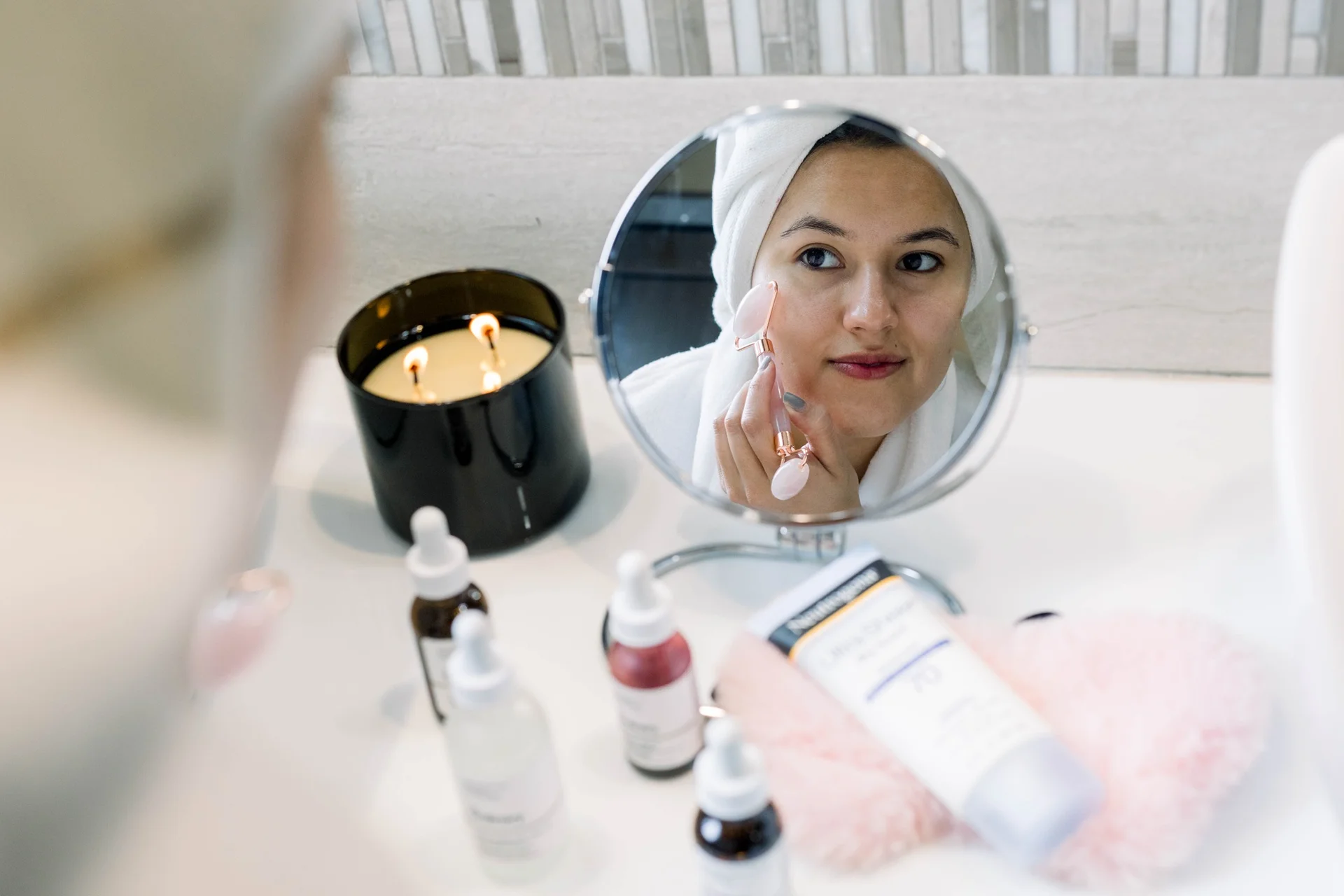
- Gua Sha / Roller: Tools that promote lymphatic drainage and blood circulation. To avoid damaging the skin, always apply over a slippery base like an oil or serum.
On a monthly basis, it’s important to monitor changes in the skin and evaluate whether products are effective. Based on these observations, you can update your routine or simplify it.
Sustainability and Tracking
Sakamoto K, et al., Cosmetic science and technology: Theoretical principles and applications (2017).
Rapini and R. P. (Ed.). Dermatological and cosmeceutical approaches to aging skin (2014).
Draelos, Z. D. Cosmetic dermatology: Products and procedures (2nd ed.) (2015).