



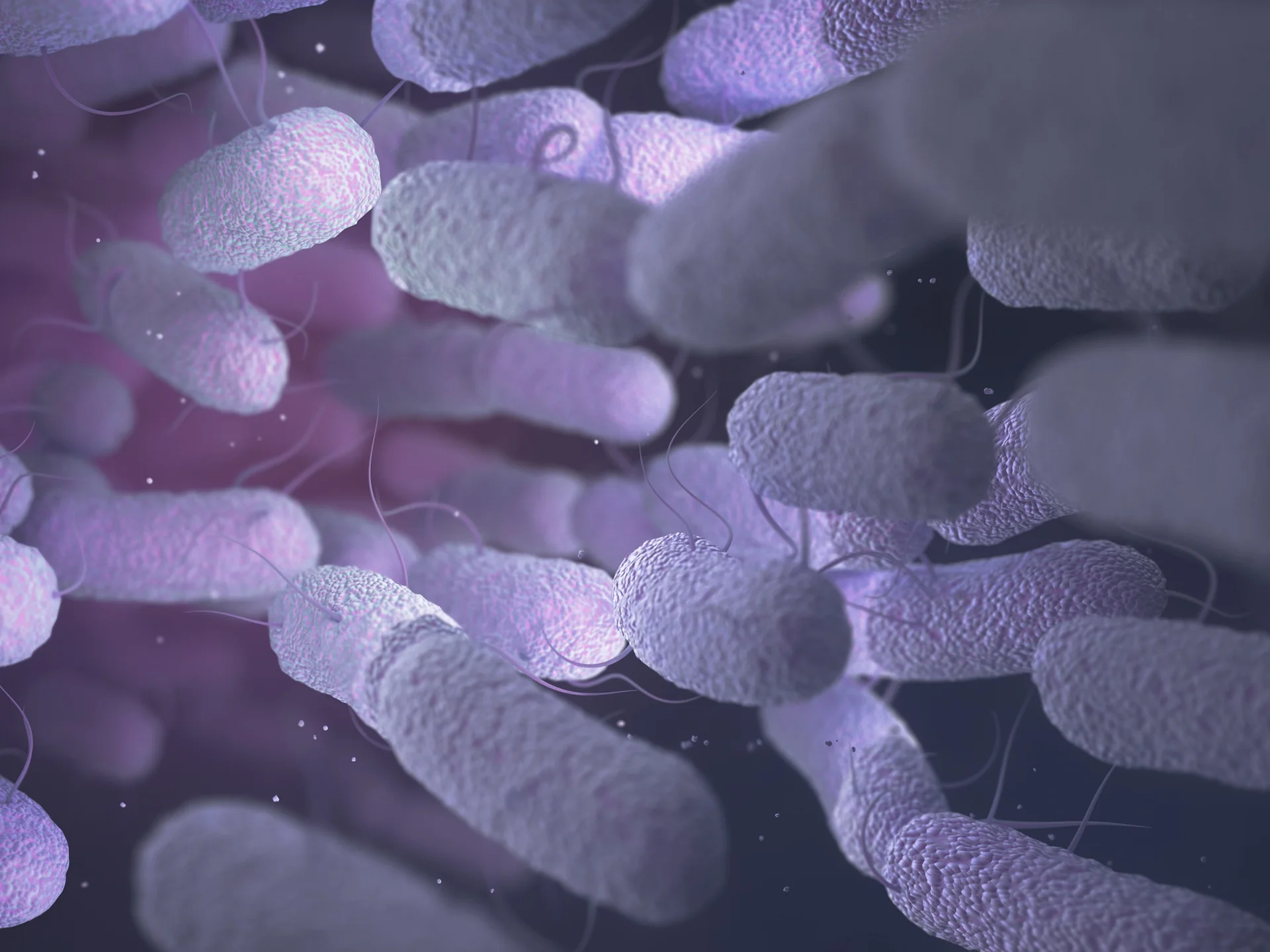
Definition of microbiota
Interactions Between Human Gut Microbiota and Physiological Systems
Diseases Associated with Human Gut Microbiota
Scientific research has provided strong evidence linking gut microbiota to the development of several diseases, including:
- Neuropsychiatric disorders: Anxiety, depression, attention deficit hyperactivity disorder (ADHD).
- Neurodevelopmental disorders: Autism spectrum disorder (ASD), schizophrenia.
- Neurodegenerative diseases: Alzheimer’s disease (AD), dementia, Parkinson’s disease (PD), multiple sclerosis (MS).
- Gastrointestinal diseases: Inflammatory bowel diseases (IBD), ulcerative colitis (UC), Crohn’s disease (CD), functional gastrointestinal disorders (e.g., irritable bowel syndrome (IBS)), non-alcoholic fatty liver disease (NAFLD).
- Metabolic diseases: Obesity, metabolic syndrome, Type 1 and Type 2 diabetes (DM).
- Addiction disorders: Food addiction, alcohol addiction, drug addiction (scientific evidence available).
- Immune and autoimmune diseases: Asthma, allergies, fibromyalgia, scleroderma, systemic lupus erythematosus (SLE).
- Respiratory and lung diseases: Chronic obstructive pulmonary disease (COPD), cystic fibrosis (CF).
- Genitourinary diseases: Urinary tract infections (UTI), polycystic ovary syndrome (PCOS), fertility/infertility.
- Certain cancer types: Gastric cancer, colon cancer, pancreatic cancer, cervical cancer, prostate cancer, skin cancer.
- Dermatological diseases: Psoriasis, atopic dermatitis, acne vulgaris, rosacea, alopecia areata, hidradenitis suppurativa.
- Bone diseases: Osteoporosis, osteoarthritis, bone resorption.
Microbiota-Gut-Brain Axis
The gut microbiota and the brain interact bidirectionally through multiple pathways. Research has identified six key pathways involved in this interaction:
- Metabolic pathway
- Neuronal pathway
- Neuroendocrine pathway
- Immunological pathway
- Barrier pathways (gut-blood barrier, blood-brain barrier)
- Signal transmission molecules (neurotransmitter) pathway
A detailed discussion of the mechanisms underlying these pathways will be provided in a future study. For now, only their names are listed.
Neuroinflammation and Neurodegeneration in the Brain
Diseases Associated with Neuroinflammation
Diseases Associated with Neurodegeneration
1. Chakraborty P, Majumder P, Banerjee D, Sarkar J. Gut microbiotanexus: Exploringtheinteractionswiththebrain, heart, lungs, and skin axesandtheireffects on health. Medicine in Microecology, Medicine in Microecology 20;2024:100104
2. Mayer EA, Tillisch K, Gupta A. Gut/brainaxisandthemicrobiota. J ClinInvest 2015;125:926-38.
3. Long-Smith C, O'Riordan KJ, et al. Microbiota-Gut-Brain Axis: New TherapeuticOpportunities. AnnuRevPharmacol, 2020;60:477-502.
4. Aroniadis OC, Brandt LJ. Fecalmicrobiotatransplantation: past, presentandfuture. CurrOpinGastroenterol. 2013;29(1):79-84.
5. Bailey MT, Dowd SE, et al. Exposureto a socialstressoraltersthestructure of theintestinalmicrobiota: implicationsforstressor-inducedimmunomodulation. Brain BehavImmun 2011; 25:397-407.
6. Beilharz JE, Kaakoush NO, et al. Cafeteriadietandprobiotictherapy: cross talk amongmemory, neuroplasticity, serotoninreceptorsand gut microbiota in therat. MolPsychiatry 2018;23:351-61.
7. Mertsalmi TH, Aho VTE, et al. Morethanconstipation-bowelsymptoms in Parkinson’sdiseaseandtheirconnectionto gut microbiota. Eur J Neurol 2017; 24:1375-83.
8. Bercik P, Denou E, et al. Theintestinalmicrobiotaaffectcentrallevels of brain-derivedneurotropicfactorandbehavior in mice. Gastroenterology 2011;141:599-609, e1-3.
9. Michel L, Prat A. Onemore role forthe gut: microbiotaandbloodbrainbarrier. AnnTranslMed 2016;4:15.
10. 56. Berer K, Mues M, et al. Commensalmicrobiotaandmyelinautoantigencooperatetotriggerautoimmunedemyelination. Nature 2011;479:538-41.
11. Braniste V, Al-Asmakh M, et al. The gut microbiotainfluencesblood-brainbarrierpermeability in mice. SciTranslMed 2014;6:263ra158.
12. Collins SM, Kassam Z, Bercik P. Theadoptive transfer of behavioralphenotypeviatheintestinalmicrobiota: experimentalevidenceandclinicalimplications. CurrOpinMicrobiol 2013;16:240-5.
13. Collins SM, Surette M, Bercik P. Theinterplaybetweentheintestinalmicrobiotaandthebrain. NatRevMicrobiol, 2012;10(11):735-42.
14. Crumeyrolle-Arias M, Jaglin M, et al. Absence of the gut microbiotaenhancesanxiety-likebehaviorandneuroendocrineresponsetoacutestress in rats. Psychoneuroendocrinology 2014;42:207-17.
15. Cryan JF, Dinan TG. Mind-alteringmicroorganisms: theimpact of the gut microbiota on brainandbehaviour. NatRevNeurosci 2012;13:701-12.
16. Dalile B, Oudenhove LV, et al. The role of short-chainfattyacids in microbiota–gut–braincommunication. Nature RevGastroenterolHepatol, 2019; 16:461–78.
17. De Angelis M, Piccolo M, et al. Fecalmicrobiotaandmetabolome of childrenwithautismandpervasivedevelopmentaldisorder not other-wisespecified. PLoSOne. 2013;8(10):e76993.
18. deTheije CG, Wopereis H, et al. Altered gut microbiotaandactivity in a murine model of autismspectrumdisorders. Brain BehavImmun. 2014;37:197-206.
19. Desbonnet L, Clarke G, et al. Gut microbiotadepletionfromearlyadolescence in mice: implicationsforbrainandbehaviour. Brain BehavImmun 2015;48:165-73.
20. Desbonnet L, Garrett L, et al. TheprobioticBifidobacteriainfantis: an assessment of potentialantidepressantproperties in therat. J PsychiatrRes 2008;43:164-74.
21. Desbonnet L et al.,Microbiota is essentialforsocialdevelopment in themouse. MolPsychiatry, 2014;19(2):146-8.
22. Diaz Heijtz R, Wang S, et al. Normal gut microbiotamodulatesbraindevelopmentandbehavior. ProcNatlAcadSci USA 2011;108:3047-52.
23. Finegold SM, Sutter VL, Mathisen GE. Normal indigenousintestinalmicrobiota. In. Hentges DJ, ed. Human intestinalmicrobiota in healthanddisease. New York. AcademicPress. 1983:3-31.
24. Fung TC, Olson CA, Hsiao EY. Interactionsbetweenthemicrobiota, immuneandnervoussystems in healthanddisease. NatNeurosci 2017;20:145-155.
25. Hsiao EY, McBride SW, et al. Microbiotamodulatebehavioralandphysiologicalabnormalitiesassociatedwithneurodevelopmentaldisorders. Cell 2013; 155:1451-63.
26. Jeffery IB, O’Toole PW, et al. An irritablebowelsyndromesubtypedefinedbyspecies-specificalterations in faecalmicrobiota. Gut 2012;61:997-1006.
27. Kelly JR, Borre Y, et al. Transferringtheblues: depression-associated gut microbiotainducesneurobehaviouralchanges in therat. J PsychiatrRes 2016;82:109-18.
28. Kelly JR, Clarke G, et al. Brain-gut-microbiotaaxis: challengesfortranslation in psychiatry. AnnEpidemiol 2016;26:366-72.
29. Li Q, Zhou JM. Themicrobiota-gut-brainaxisanditspotentialtherapeutic role in autismspectrumdisorder. Neuroscience, 2016;324:131-9.
30. Li Q, et al. The Gut MicrobiotaandAutismSpectrumDisorders. Front Cell Neurosci, 2017;11:120.
31. Mangiola F, et al. Gut microbiota in autismandmooddisorders. World J Gastroenterol, 2016. 22(1):361-8.
32. Park AJ, Collins J, et al. Alteredcolonicfunctionandmicrobiotaprofile in a mouse model of chronicdepression. NeurogastroenterolMotil 2013;25;733-e575.
33. Rhee SH, Pothoulakis C, Mayer EA. Principlesandclinicalimplications of thebrain-gut-entericmicrobiotaaxis. NatRevGastroenterolHepatol 2009;6:306-14.
34. Sharon G, et al. Human Gut MicrobiotafromAutismSpectrumDisorderPromoteBehavioralSymptoms in Mice. Cell, 2019. 177(6):1600-18 e17.