




What is nighttime anxiety?
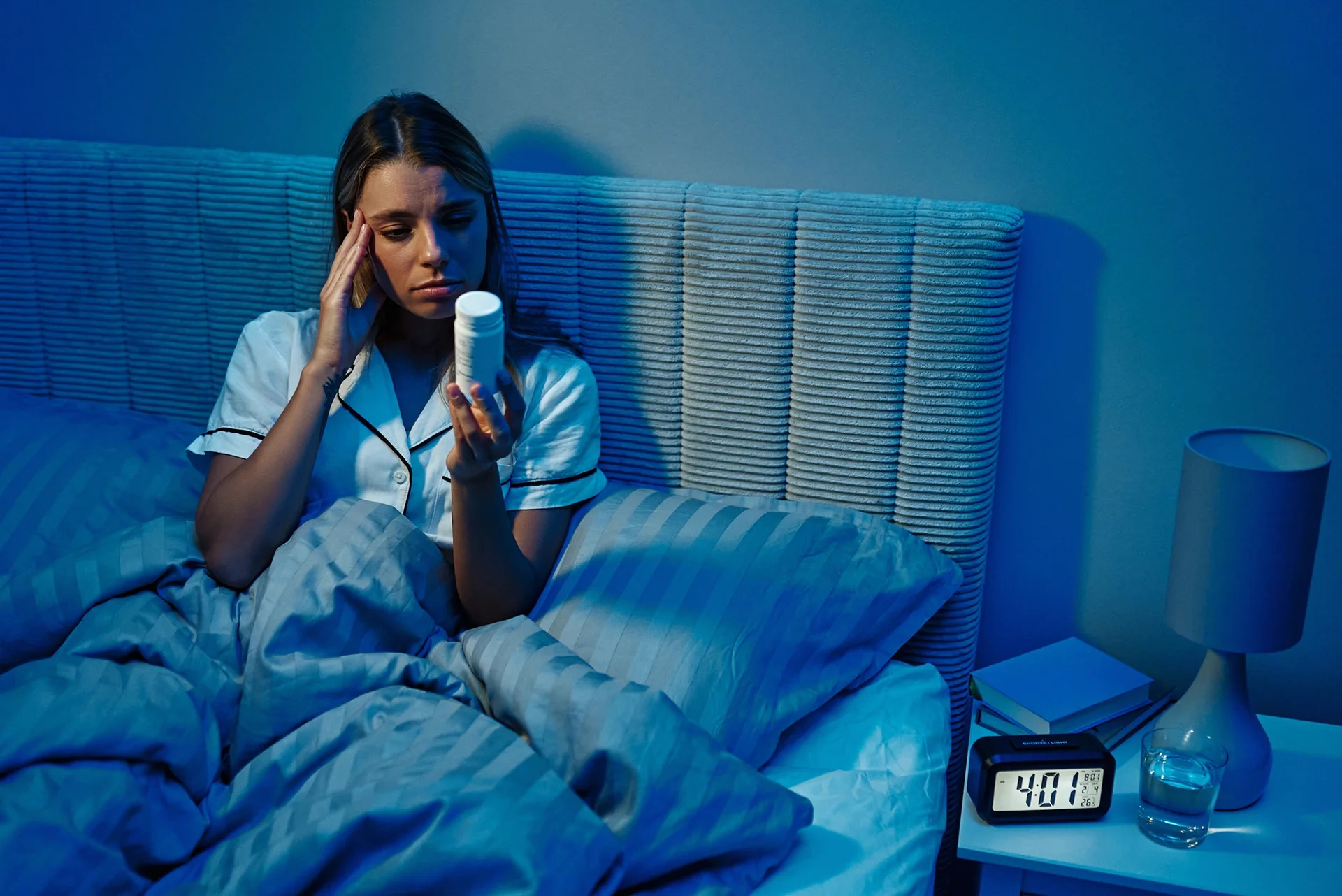
Nighttime anxiety is intense worry and physiological arousal (racing heart, rapid breathing, “something bad will happen,” a mind that won’t stop) occurring at sleep onset or after nighttime awakenings. It can resemble panic attacks or a sleep-focused anxiety loop (“If I don’t sleep, tomorrow is ruined”). It sustains insomnia: the harder you try to sleep, the more the body’s alarm system activates.
Management has two layers: acute calming and root correction. Acutely, slow breathing, muscle relaxation, brief worry-journaling, and not staying in bed awake for long can help. For durable change, CBT-I combined with anxiety-focused cognitive techniques is effective: reducing catastrophizing, stimulus control, sleep restriction, and daytime stress regulation. Alcohol, nicotine, and late caffeine often worsen nighttime anxiety.
If symptoms are frequent, impairing, or accompanied by daytime panic/depression, professional care is appropriate. Chest pain, fainting, or severe palpitations warrant medical evaluation.
Evidence base: CBT-I as first-line for chronic insomnia and clinical frameworks for sleep disorder assessment.