






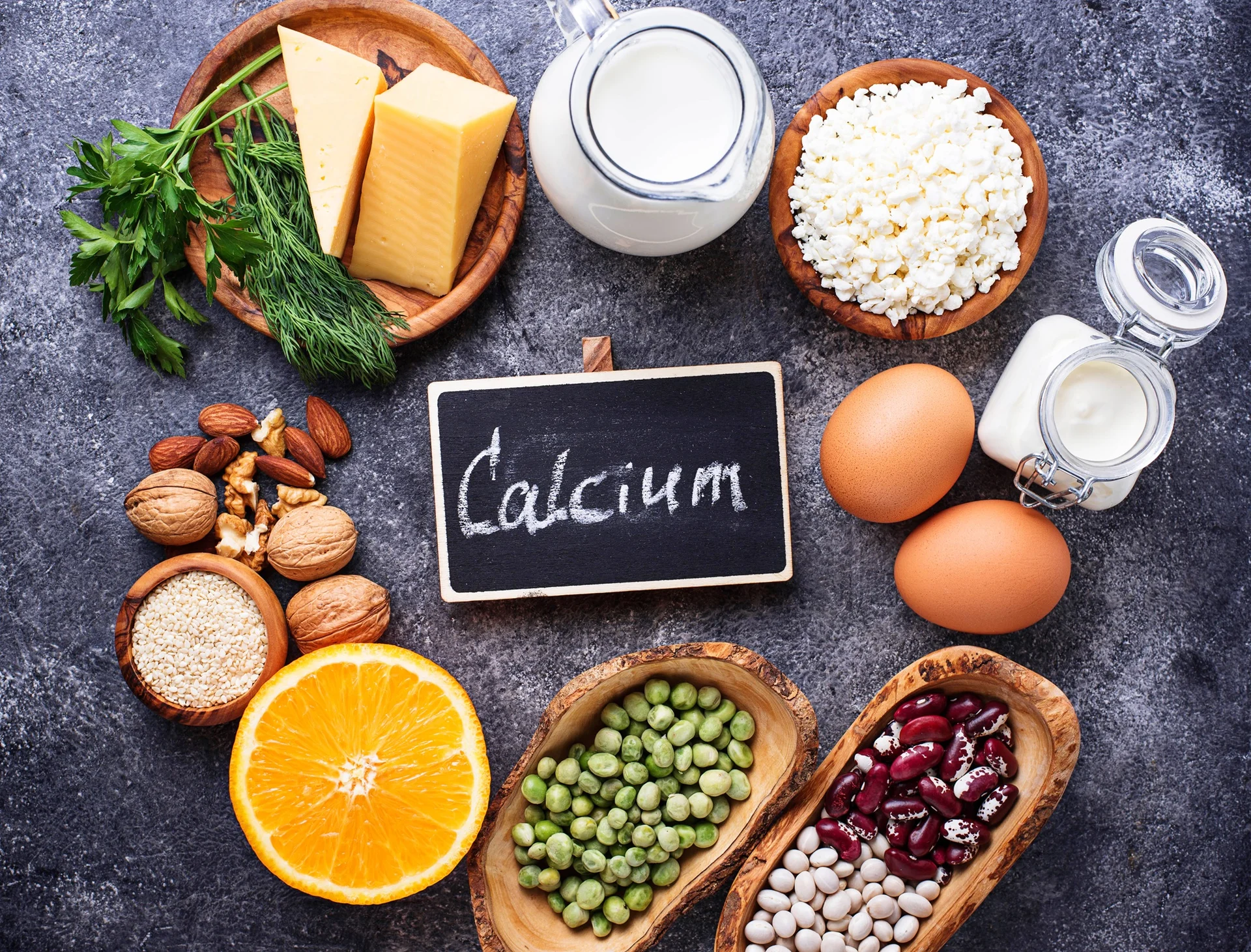
Which foods contain calcium?
CALCIUM & BONE HEALTH: A SCIENCE-BASED, PLAIN-LANGUAGE Q&A GUIDE
“Calcium is not only for bones; it also supports muscle contraction, nerve signaling, and heart rhythm.”
The strongest calcium sources are typically dairy foods: milk, yogurt, kefir, and many cheeses. Fish can be notable when bones are eaten—such as canned sardines or salmon with soft bones. Plant-based options include calcium-fortified beverages (fortified plant milks), tofu made with calcium salts, sesame/tahini, almonds, legumes, and some leafy greens. However, bioavailability varies: spinach can be high in oxalates that reduce absorption, while some greens like kale can provide more absorbable calcium. The best strategy is diversity spread across the day: (1) dairy or a fortified alternative with meals, (2) nuts/tahini as snacks, (3) legumes and vegetables at main meals. Also, very high sodium intake can increase urinary calcium loss, so avoid a chronically high-salt pattern.