



Assoc. Prof. Muhammet Emin Çam
Rector Advisor, Vice Dean, and Faculty Member - Istanbul Kent University, Faculty of Pharmacy, Departmant of Pharmocology
Visiting Researcher&Lecturer -  University College London, Mechanical Engineering and Faculty of Medicine, UK
Visiting Lecturer - University of Aveiro, Faculty of Biomedical Engineering, Portugal
Editorial note
Map of Health content is prepared with an evidence-based approach. References are provided for transparency.
Medical disclaimer
This content is for informational purposes only and does not replace professional medical advice, diagnosis, or treatment. If you have an urgent medical concern, seek immediate care.
"The right foods consumed regularly increase the eyes' resistance to environmental factors, contributing to long-term visual ability."
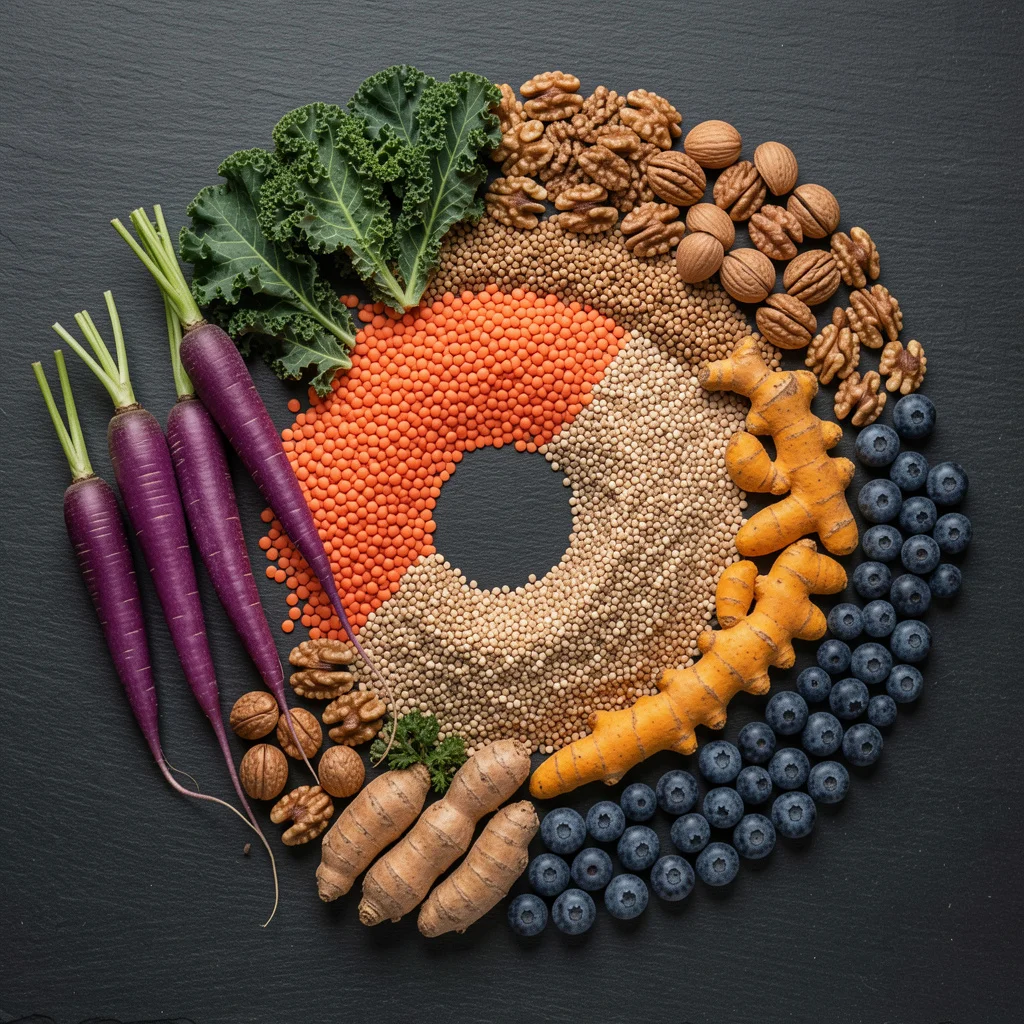
Foods Beneficial for Eye Health

Foods Beneficial for Eye Health

FoodHealth BenefitSuggested Intake (Daily)
CarrotProvides Vitamin A, supports night vision1 medium size
SpinachContains Lutein, protects the eyes1 serving
SalmonContains Omega-3, prevents dry eyes2-3 servings per week*
EggContains Lutein and Zinc, protects the macula1 unit
AlmondProvides Vitamin E, protects eye cells1 handful
OrangeContains Vitamin C, reduces the risk of cataracts1 unit
Sweet PotatoContains Beta-carotene, supports eye health1 serving
BroccoliContains Lutein, reduces eye fatigue1 serving
Sunflower SeedsSource of Vitamin E, protects cells1 handful
Red PepperSupports retinal health with Vitamin C1 serving

Assoc. Prof. Muhammet Emin Çam
Rector Advisor, Vice Dean, and Faculty Member - Istanbul Kent University, Faculty of Pharmacy, Departmant of Pharmocology
Visiting Researcher&Lecturer -  University College London, Mechanical Engineering and Faculty of Medicine, UK
Visiting Lecturer - University of Aveiro, Faculty of Biomedical Engineering, Portugal


FAQ

EYE HEALTH, EVIDENCE-BASED Q&A GUIDE “The eye is not only a ‘vision’ organ; it is a finely tuned biological system shaped by sleep, screens, nutrition, and circulation.” Protecting eye health is less about a single miracle product and more …

The 20-20-20 rule is a practical micro-break protocol to reduce digital eye strain: every 20 minutes, look at something about 20 feet (≈6 meters) away for at least 20 seconds. The rationale is straightforward—sustained near focus increases …

Eye fatigue most commonly comes from the combination of prolonged near work and environmental stress. With screens, reading, and detail-heavy tasks, the eye sustains accommodative effort while blink rate tends to drop. Fewer blinks accelera…

Tired-eye symptoms are most often driven by dryness, heavy screen time, and disrupted sleep—so relief works best with a layered approach. Step one is load reduction: a 10–15 minute screen break, distance viewing, and better lighting can pro…

Blurred vision is not a diagnosis—it is a shared alarm signal with many possible causes. One common, relatively benign mechanism is dryness-related fluctuating blur: during prolonged screen focus the tear film destabilizes, vision intermitt…

There is no single “magic vitamin” for eye health—evidence favors an overall dietary pattern and correct clinical indication. For the general population, the most robust strategy is a nutrient-dense diet with colorful produce (especially da…

Yes—though it is uncommon and typically warrants careful evaluation. Because vitamin B12 is crucial for the nervous system, deficiency can, in some cases, affect the optic nerve (optic neuropathy) and lead to visual problems. A typical pres…

Seawater may look “natural,” but it is not sterile—so using it to “clean” or treat the eye is not a safe practice. This is especially important for contact lens wearers: water exposure (ocean, pool, shower) is considered a risky behavior be…